We use cookies to make your experience better. To comply with the new e-Privacy directive, we need to ask for your consent to set the cookies. Learn more.


Pollen Presses for Kief Compression, Manual and Hydraulic Options
Got a kief collection building up and nowhere useful to put it? A pollen press turns loose trichomes into solid, compact pucks that store cleanly, stay fresh for longer, and are far easier to portion. Manual T-bar presses suit most everyday use, while hydraulic options handle larger batches with less effort. Chongz and Piecemaker both make reliable kit worth a look. Browse below to find the right press for how you work.
-
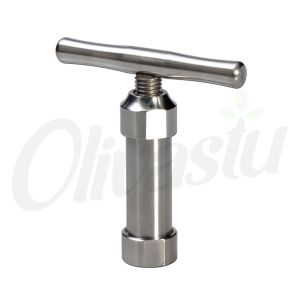 Heavy Duty T-Bar Aluminium Pollen PressAs low as £35.99
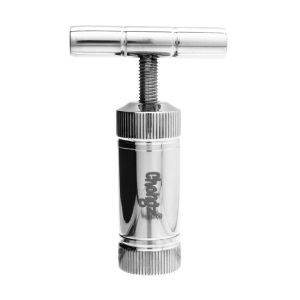
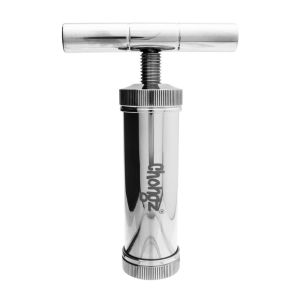
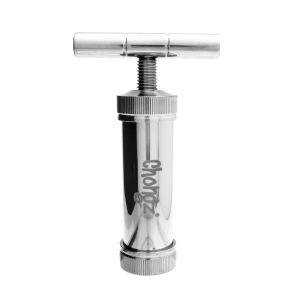
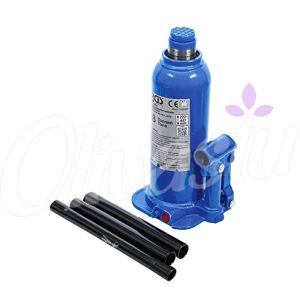
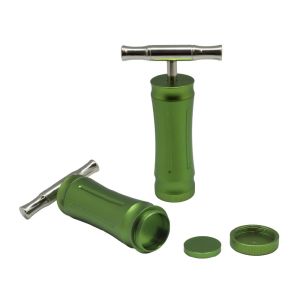
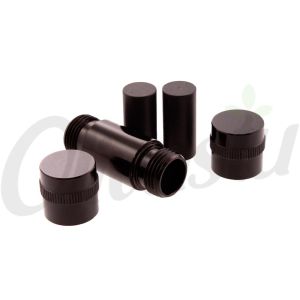
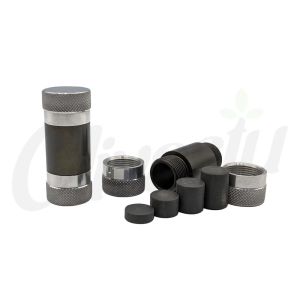
Manual T-Bar or Hydraulic: Which Type Suits You?
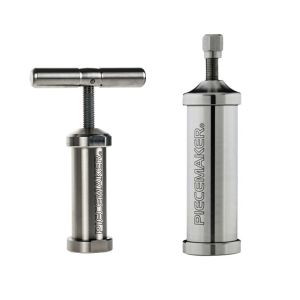
Most pollen presses work on a simple screw principle: two end caps tighten against a central barrel, building pressure on the kief inside over the course of an hour or two. These manual T-bar presses are compact, need no power source, and are easy to use at home or on the move. Hydraulic presses apply force differently (some push upward, others downward or from the side) and generally suit people processing larger quantities in one session, where hand-tightening a screw would take longer. For occasional personal use, a manual press is usually all you need.
Shorter or Longer Barrel: What Batch Size Are You Working With?
Barrel length is the main practical difference between presses in the same range. A shorter barrel holds less material per press and suits smaller, more frequent batches, good if you collect kief gradually and press it as you go. A longer barrel takes a bigger charge in one go, which is more efficient if you accumulate a larger amount before pressing. Weight goes up with size too, so a heavier press generally feels more solid in hand and may apply more consistent pressure, though the core mechanism works the same way across sizes.
Stainless Steel vs Aluminium: Does the Material Matter?
Both stainless steel and aluminium pollen presses do the same job, but the materials have different practical qualities. Stainless steel is denser and more resistant to corrosion over time, which matters if you clean your press regularly with water or solvents. Aluminium is lighter for the same barrel length, which can make it easier to carry. Neither material affects the quality of the compressed puck: what matters more is how tightly the end caps thread and how evenly pressure distributes across the barrel. Several Chongz T-bar presses are made from steel; other options in the range use aluminium.
What Comes Out, and Why a Pressed Puck Stores Better Than Loose Kief
The output of a pollen press is a solid disc or puck, denser than loose kief, with less surface area exposed to air. That reduced exposure slows oxidation, which is the main reason pressed kief stays fresh and aromatic for longer in storage. A puck is also easier to handle: you can break off a consistent portion rather than trying to measure out a pinch of powder. Some presses produce plain discs; others, like those from Piecemaker, emboss a design into the surface of the puck, which makes no difference to the result but is a nice detail. If you also press flowers rather than kief (for example, as a pre-press step before rosin work), a longer barrel with a firm thread gives you more control over the pressure applied.
Frequently asked questions
Is using a pollen press actually worth it?
For most people who collect kief regularly, yes. Pressing kief into a solid puck reduces the surface area exposed to air, which slows oxidation and helps it stay fresh and aromatic for longer than loose powder would. A puck is also much easier to portion consistently. If you only collect small amounts occasionally, the benefit is smaller, but the process adds no cost beyond the press itself.
Can you use a pollen press with dry sift or bubble hash, or only kief?
A manual T-bar press works with kief, dry sift, and bubble hash: all are forms of separated trichomes and compress in the same way. Some people also use a pollen press as a pre-press step with finely ground flower before rosin work, to form a uniform puck that fits a rosin bag more neatly. The core screw mechanism handles all of these inputs without adjustment.
How do you clean a pollen press between uses?
Disassemble the press by unscrewing both end caps and removing the barrel insert. A cotton bud or thin brush clears residue from inside the barrel. For stainless steel presses, a small amount of isopropyl alcohol on a cloth handles sticky buildup without risking corrosion. Aluminium presses are fine with the same method, though repeated soaking in solvents is worth avoiding. Let all parts dry fully before reassembling.

Filter
Shopping Options