We use cookies to make your experience better. To comply with the new e-Privacy directive, we need to ask for your consent to set the cookies. Learn more.


Herb Grinders, 2-Part to 5-Part Models for Every Sesh
A good herb grinder turns a fiddly job into a quick one, and gets you a more even result than breaking by hand. Whether you're after a simple 2-part for your pocket, a 4-part with a kief catcher to collect every last bit, or something a bit more considered like a hemp-based eco option, you'll find the right fit below. Headchef, Chongz and Flower Mill are all here. Have a browse and pick your new go-to.
-
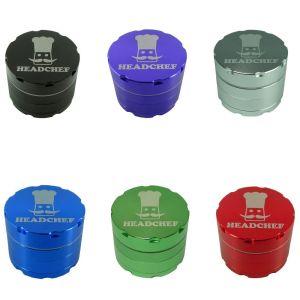 Headchef Razor 4 Piece Metal Herb GrinderAs low as £12.99
2-Part, 3-Part or 4-Part: Which Configuration Do You Actually Need?
The number of parts tells you what a herb grinder does beyond the basic grind. A 2-part is the simplest option: twist, open, done. Your ground herb sits right there in the bottom chamber. A 3-part adds a storage compartment below, so you can grind ahead and keep a little ready. A 4-part goes further, with a fine pollen screen and a kief catcher at the base. That's the chamber that collects the powdery trichome-rich material that sifts through during grinding. It builds up slowly, but it's worth having. If you grind regularly, a 4-part generally pays for itself in what you'd otherwise lose.
Metal, Acrylic or Hemp: What Material Suits Your Setup?
Aluminium is a go-to choice for a reason. The teeth stay sharp over time, the body won't crack under regular use, and it cleans up easily. Brands like Headchef and Chongz both work in aluminium, with some models adding a bearing system for a noticeably smoother rotation. Acrylic grinders are lighter and cheaper, which makes them handy for travel or as a backup, though the teeth can wear faster. Hemp-based grinders are a newer option, moulded from a biodegradable composite rather than petroleum-derived plastic. Stainless steel sits at the premium end and is built to last considerably longer than either acrylic or standard aluminium.
Does Grinder Size Actually Matter?
Diameter affects how much you can grind in one go, not just how it feels in your hand. Compact 44mm grinders fit neatly in a pocket and suit lighter, more occasional use. Step up to 62mm or 63mm and you get a wider grinding chamber that handles a bigger load without needing a second pass. If you tend to grind for a group or just prefer to do it once and be sorted, the larger sizes are worth it. Most grinders on the market sit in the 50mm to 63mm range, which is a comfortable middle ground for everyday use.
What Else Is Worth Knowing Before You Buy?
Tooth design matters more than it sounds. Diamond-cut or sharp-edged teeth slice cleanly and produce a consistent, even grind, which burns more evenly than a rough, hand-broken result. Some Headchef models use ceramic blades rather than metal teeth, which reduces metal-on-herb contact during grinding. Flower Mill takes a different approach entirely, using flat milling plates instead of teeth to produce a fluffier, less compressed texture, and their plates can be swapped out when worn, rather than replacing the whole grinder. If you prefer not to grind at all, foldaway herb scissors are a quick alternative that give a looser, chunkier chop. Whichever you go for, a quick brush-out after each sesh keeps things turning smoothly.
Frequently asked questions
How many parts should my herb grinder have?
It comes down to what you want from it. A 2-part is the simplest: twist, open, done, with your herb ready in the bottom chamber. A 3-part adds a storage compartment so you can grind ahead. A 4-part adds a fine screen and a kief catcher that collects the powdery bits that sift through. If you grind regularly, a 4-part is usually the one to go for.
Can I use a herb grinder for cooking herbs and spices?
You can, though it's worth keeping a separate one for the kitchen. The grinding chambers and teeth on aluminium and acrylic grinders work well on dried herbs like rosemary, thyme or oregano. The main thing to consider is cross-contamination of flavours if you switch between uses. A dedicated 2-part grinder is the simplest option for kitchen use, since there's no kief catcher to clean around.
How do I stop my herb grinder getting sticky and hard to turn?
Resin and fine particles build up in the threads and around the teeth over time, which is what causes that stiff, gritty feeling. A small brush (a clean toothbrush works well) cleared through the teeth and screen after each sesh keeps things moving. For a deeper clean, disassemble the grinder and soak metal parts in isopropyl alcohol for a few minutes, then brush and rinse. Acrylic grinders should only be rinsed with warm water, as alcohol can cause the plastic to craze.
